AFC Championship Controversy Erupts as Robert Kraft’s Venue Request Ignites League-Wide Debate
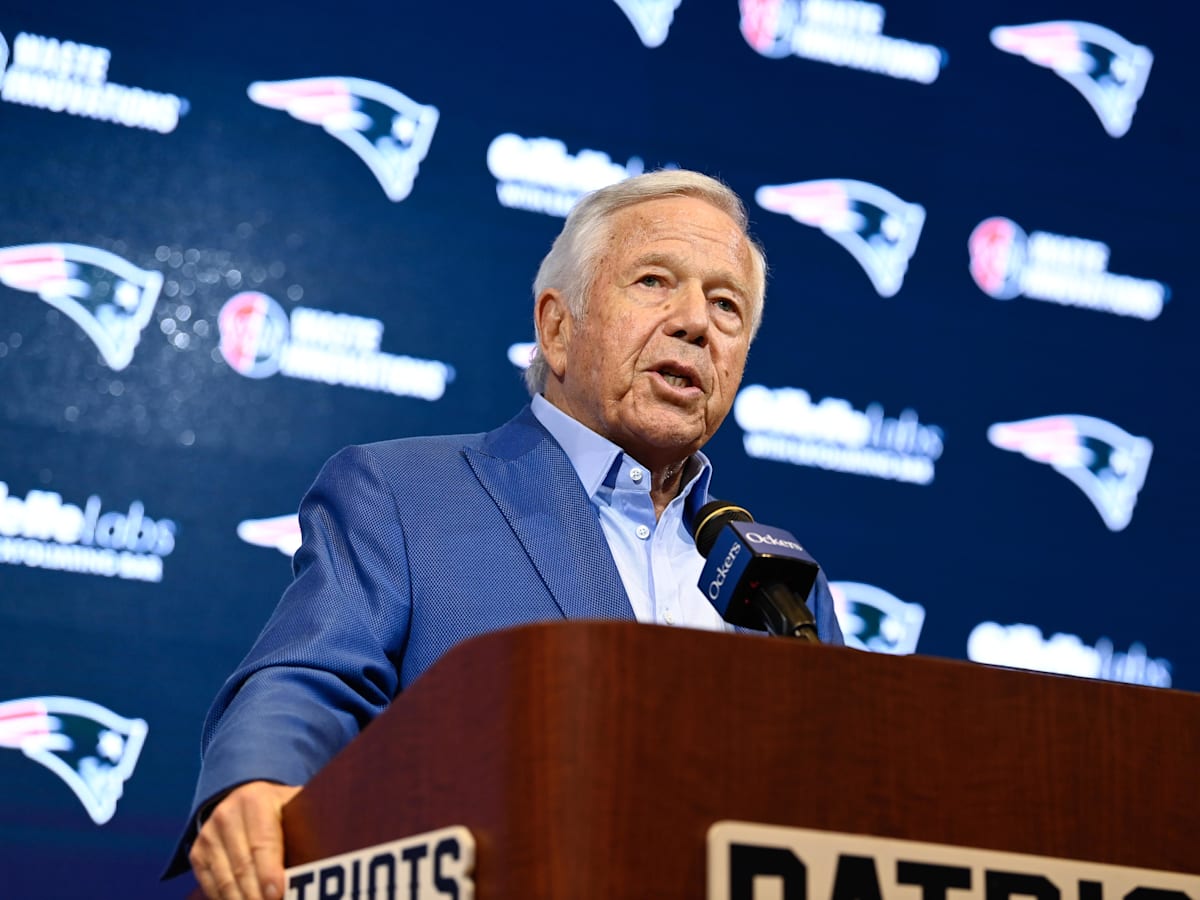
As the NFL prepares for one of the most anticipated games of the season, tensions are rising far beyond the sidelines. The upcoming AFC Championship matchup between the New England Patriots and the Denver Broncos was already destined to be a high-stakes showdown, but a recent request from Patriots president Robert Kraft has added a dramatic new layer to the narrative. Kraft has formally asked the NFL to consider changing the venue for the game, citing concerns over poor field conditions at Empower Field at Mile High and the competitive disadvantage of playing at an altitude exceeding 5,000 feet above sea level. The move has sparked widespread debate across the league, divided fans, and intensified scrutiny on how much external factors should influence championship games.
At the heart of the controversy is a fundamental question: should environmental conditions be considered an unfair competitive edge, or are they simply part of the game? For decades, teams have prided themselves on adapting to adverse circumstances, whether it be freezing temperatures, sweltering heat, heavy rain, or thin mountain air. Kraft’s request, however, has brought that long-standing assumption into sharp focus, challenging the league to define where fairness ends and competitive reality begins.
From the Patriots’ perspective, the concerns are rooted in player safety and competitive balance. Sources close to the organization argue that the playing surface at Empower Field has raised red flags in recent weeks, with inconsistent traction and wear patterns that could increase the risk of injury. Combined with the physiological demands of competing at high altitude—where oxygen levels are lower and fatigue can set in more quickly—the Patriots believe the conditions could significantly impact performance in a game that determines a Super Bowl berth. Kraft’s camp maintains that the request is not about avoiding competition, but about ensuring the league’s marquee moments are decided by execution and preparation rather than environmental disadvantage.
Altitude has long been one of Denver’s most talked-about home-field advantages. Visiting teams often speak of heavy legs, shortened breath, and the challenge of maintaining intensity late in games. Sports science has consistently shown that athletes unaccustomed to high elevation may experience reduced endurance and slower recovery. While teams typically attempt to mitigate these effects through adjusted travel schedules and conditioning strategies, critics of the current setup argue that such measures can only go so far. In a single-elimination playoff game, even a small physiological edge could prove decisive.
The Broncos, unsurprisingly, see the situation very differently. Head coach Sean Payton wasted little time responding to the news, dismissing Kraft’s request as an excuse rather than a legitimate concern. In Payton’s view, the essence of competitive sports lies in adaptability. Teams earn the right to host playoff games through regular-season performance, and with that right comes the inherent advantages of home conditions. Denver’s organization has emphasized that their players train and compete on the same field under the same conditions week after week, and that those factors are part of what makes their home environment formidable.
Payton’s comments have resonated with many around the league, particularly former players and coaches who view environmental challenges as an integral part of football’s identity. Lambeau Field’s winter cold, Miami’s early-season heat, and Seattle’s crowd noise are often cited as examples of conditions teams must overcome on the road. To them, singling out altitude or field conditions sets a precedent that could open the door to countless future disputes, potentially undermining the value of earning home-field advantage.

The NFL now finds itself in a delicate position. On one hand, the league has made player safety a central pillar of its public messaging, investing heavily in research, rule changes, and field technology. Ignoring concerns about playing surfaces or health risks could appear inconsistent with that commitment. On the other hand, altering the venue for a conference championship game would be an extraordinary move, one that could invite backlash from fans, teams, and partners who expect the postseason structure to remain predictable and merit-based.
Historically, the league has been reluctant to relocate games unless extraordinary circumstances arise, such as severe weather emergencies or stadium unavailability. Even then, decisions are often made with significant logistical challenges in mind, including ticketing, broadcasting, and security. Changing the site of an AFC Championship game would not only disrupt those plans but also risk alienating a fan base that has waited all season for the opportunity to host one of the NFL’s biggest events.
For fans, the controversy has only heightened anticipation. Supporters of the Patriots largely see Kraft’s stance as a proactive effort to protect his team’s chances in a game where the margins for error are razor-thin. Broncos fans, meanwhile, view the request as a sign of respect for the difficulty of playing in Denver—and, in some cases, as an admission that Mile High remains one of the league’s toughest places to win. Across social media and sports talk shows, debates rage over whether the request undermines the spirit of competition or exposes long-ignored inequities in playoff conditions.
Beyond the immediate matchup, the situation raises broader implications for the NFL’s future. As analytics and sports science continue to influence decision-making, teams are increasingly willing to challenge traditional norms in pursuit of competitive advantage. Kraft’s move may signal a shift toward more open dialogue about how factors like altitude, field quality, and climate impact fairness at the highest levels of the sport. Whether the league chooses to act on this particular request or not, the conversation it has sparked is unlikely to fade.

s kickoff approaches, one thing is certain: the AFC Championship between the Patriots and the Broncos will be played under an intense spotlight. Every snap, every decision, and every moment of fatigue will be scrutinized through the lens of this controversy. Should the game proceed as scheduled in Denver, it will serve as a definitive test of the Broncos’ belief in home-field resilience and the Patriots’ ability to overcome perceived disadvantage. If the league were to intervene, it would mark a historic departure from precedent, reshaping how postseason football is viewed.
In the end, championships are remembered not just for the final score, but for the stories that surround them. This AFC Championship already has one of the most compelling narratives of the season—a clash not only between two elite teams, but between differing philosophies of competition, fairness, and what it truly means to earn the right to play for a Super Bowl.