A Closed-Door Meeting in Foxborough: Why Robert Kraft’s Decision on Drake Maye Has the Entire NFL Watching
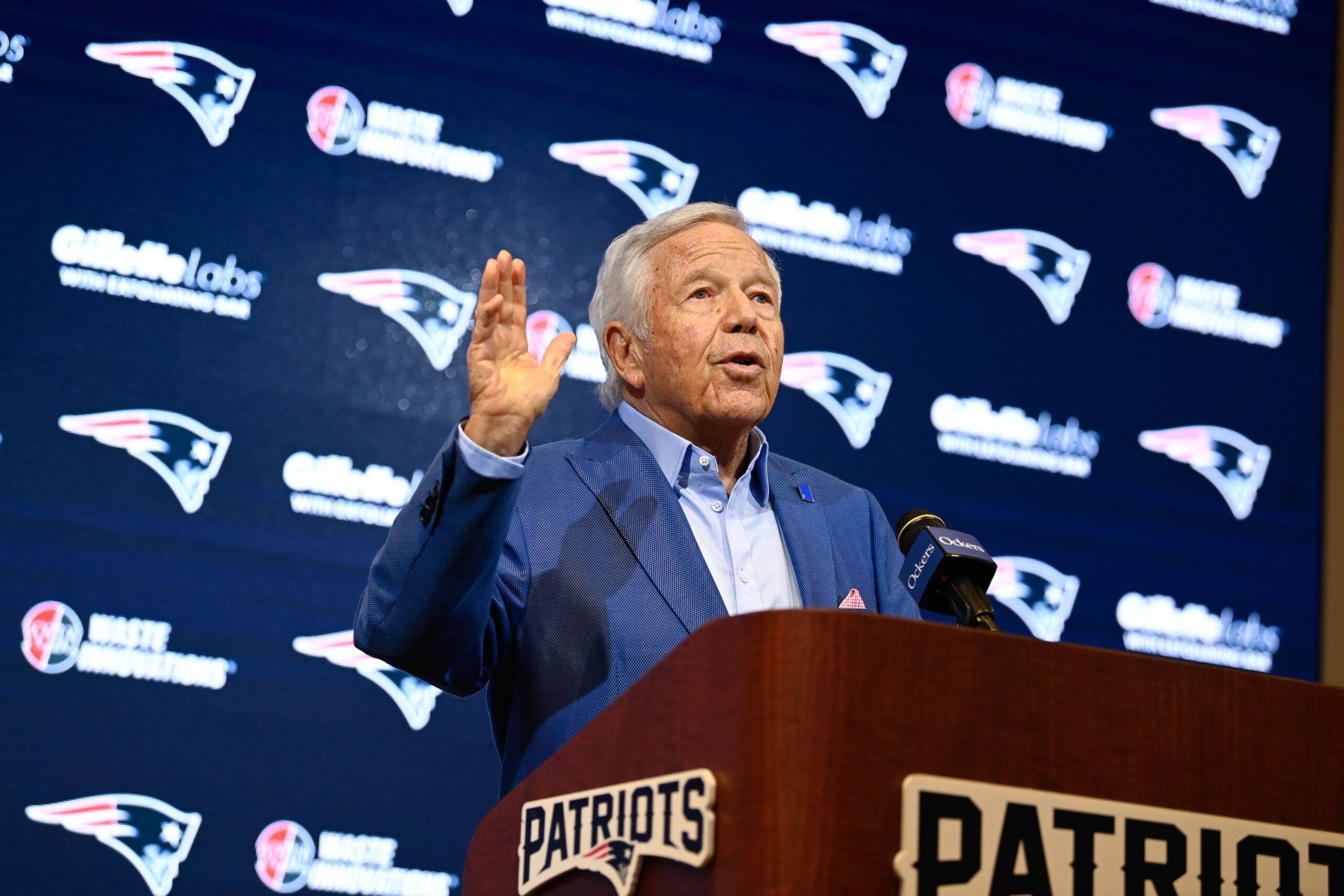
In the days leading up to New England’s highly anticipated matchup against the Seattle Seahawks, an unusual sense of tension settled over Foxborough. Inside Gillette Stadium, behind closed doors and far from cameras or microphones, an internal meeting between the Patriots’ ownership and coaching staff stretched beyond an hour. When it finally concluded, one thing was clear: this was not a routine football discussion. Moments later, a statement from team owner Robert Kraft ignited speculation across the league, centering on one name that now sits at the heart of the Patriots’ future — quarterback Drake Maye.
For an organization defined by stability and discipline over the past two decades, the timing and gravity of the meeting raised immediate questions. Why now? Why before a crucial game against a physical, well-coached Seahawks team? And most importantly, what does this moment mean for Drake Maye, the young quarterback many believe represents the next era of Patriots football?
The Patriots are no strangers to pivotal decisions at quarterback. From the unlikely rise of Tom Brady to the post-dynasty search for a new identity, the position has always defined the franchise’s trajectory. Drake Maye arrived in New England with immense expectations — not just as a talented passer, but as a symbol of renewal. His arm strength, poise under pressure, and leadership qualities quickly earned the trust of the locker room. Yet, as with any young quarterback, progress has not been linear.
Sources close to the team suggest the meeting was not fueled by panic, but by urgency. The Patriots’ front office understands the AFC landscape has changed. The conference is stacked with elite quarterbacks, innovative offenses, and aggressive roster-building strategies. Standing still is no longer an option. Every decision, especially at quarterback, carries long-term consequences.
Robert Kraft’s role in this process cannot be overstated. Throughout his tenure as owner, Kraft has balanced loyalty with pragmatism. He has shown patience when he believes in a vision, but he has also proven willing to make bold moves when the franchise’s standards are threatened. His message following the meeting was measured, yet deliberate — the kind of statement that signals intention without revealing specifics.

Drake Maye’s situation is complex. On one hand, he remains one of the most promising young quarterbacks in the league. His ability to extend plays, attack downfield, and command a huddle has drawn praise from coaches and teammates alike. On the other hand, the Patriots’ offense has struggled at times to find consistency, placing Maye under a microscope that few young players can escape.
The upcoming game against Seattle adds another layer of intrigue. The Seahawks are known for defensive intensity, disciplined coverage, and a willingness to test quarterbacks mentally and physically. It is the kind of opponent that can either validate confidence or expose lingering doubts. For Maye, it represents more than just another game on the schedule — it is a statement opportunity.
Around the league, executives and analysts are paying close attention. Some view Kraft’s involvement as a sign of confidence, interpreting the meeting as a reaffirmation of the organization’s commitment to Maye. Others see it as a reminder that no role in New England is guaranteed, regardless of potential or draft status. In Foxborough, accountability has always been non-negotiable.
Inside the locker room, teammates have publicly expressed support for their quarterback. Veteran leaders have emphasized unity and preparation, pushing back against narratives of instability. Yet privately, players understand the reality of the NFL. Decisions made at the top inevitably ripple through the roster, shaping not only game plans but careers.
What makes this moment particularly compelling is the contrast between patience and pressure. Developing a quarterback takes time, trust, and continuity. But the NFL is an unforgiving environment, where windows close quickly and opportunities vanish without warning. Kraft’s challenge is to balance belief in Maye’s growth with the responsibility to keep the Patriots competitive now.
Historically, the Patriots have thrived when clarity existed at quarterback. When players knew who the leader was, the organization moved with purpose. Ambiguity, even temporary, invites speculation and distraction. That is why Kraft’s post-meeting message matters so much — not for what it revealed, but for what it signaled.
As kickoff against Seattle approaches, the spotlight on Drake Maye will only intensify. Every throw, every decision, every reaction on the sideline will be scrutinized. For fans, it is a moment filled with both hope and anxiety. They want to believe they are witnessing the early chapters of another great Patriots quarterback. They also fear the possibility of another reset.

Ultimately, this story is not just about one meeting or one game. It is about identity. The Patriots are redefining who they are in a post-dynasty era, and Drake Maye sits at the center of that transformation. Robert Kraft’s involvement underscores how seriously the organization takes this moment.
Whether the Seahawks game becomes a turning point or simply another step in a longer journey remains to be seen. What is certain is that the NFL is watching Foxborough closely. Decisions made now will echo far beyond this week, shaping the Patriots’ path for years to come. And as the stadium lights turn on and the ball is kicked into the air, one question will linger louder than all the rest: is this the moment Drake Maye truly becomes the face of New England’s future, or the moment everything changes?