CHICAGO — In a statement that quickly caught fire across the basketball world, Angel Reese has sparked a fresh — and highly controversial — debate about officiating in the modern game. The rising star suggested she would prefer playing without referees altogether, implying she could “handle things” herself on the court.
Whether delivered with frustration, humor, or a mix of both, the remark immediately ignited conversation across the WNBA landscape. Fans, analysts, and former players all weighed in on a question that sounds simple on the surface but cuts to the core of how professional sports function:
What would basketball look like without referees?
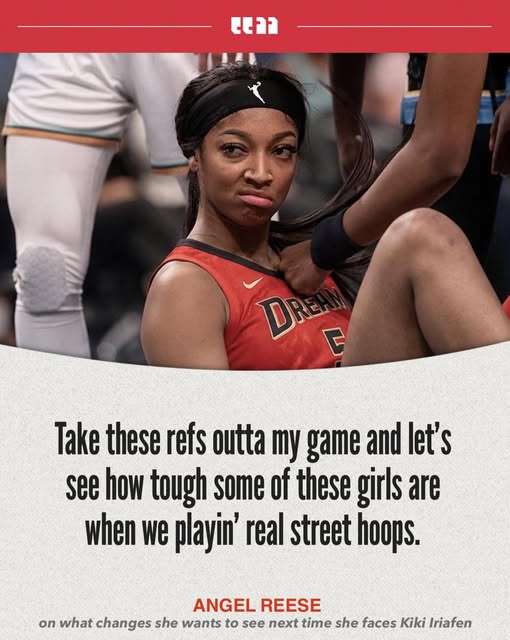
Reese’s comment appears to stem from a familiar place — player frustration. Officiating has long been one of the most scrutinized aspects of basketball at every level, from youth leagues to the professional stage. Split-second decisions, subjective calls, and the physical nature of the sport often create tension between players and officials.
For competitors like Reese, who play with intensity and emotion, that tension can boil over.
“Players want consistency,” one former WNBA player said. “When they feel like they’re not getting it, emotions take over. That’s part of the game.”
But eliminating referees altogether? That’s where the idea moves from frustration to fantasy.
Officiating, while imperfect, serves as the backbone of organized basketball. Referees enforce rules, maintain order, and ensure player safety — three elements that are non-negotiable at the professional level. Without them, the structure of the game would quickly unravel.
Imagine a fast break with no whistle on contact. A contested rebound with escalating physicality. A late-game possession with no one to determine whether a play was clean or a foul. What starts as competition could easily turn into chaos.

“There’s a reason every professional sport has officials,” one analyst noted. “It’s not just about calling fouls — it’s about protecting the integrity of the game.”
Still, Reese’s comment resonates in a different way when viewed through the lens of player empowerment. Athletes today are more vocal than ever, using their platforms to challenge systems, question authority, and push for change. In that context, her statement can be seen less as a literal proposal and more as an expression of dissatisfaction.
And that dissatisfaction is not unique to Reese.
Across the WNBA and beyond, players have increasingly called for improvements in officiating — whether through better training, more accountability, or the expanded use of technology like replay review. The goal isn’t to remove referees, but to make the system more consistent and transparent.
Fans, however, have taken the debate in multiple directions.
Some embraced the idea in a lighthearted way, joking about “streetball rules” and imagining a version of the WNBA where players settle disputes themselves. Others were more critical, arguing that such a suggestion undermines the professionalism of the league.
“Without refs, it’s not a league — it’s chaos,” one fan wrote. “There has to be structure.”
At the same time, a segment of supporters sided with Reese’s underlying frustration. They pointed to specific games and controversial calls, arguing that inconsistent officiating can impact outcomes and player performance.
“It’s not about removing refs,” another fan commented. “It’s about making sure they get it right.”
That distinction may ultimately define how this conversation evolves.
Because while the idea of a referee-free league is unrealistic, the conversation it sparks is very real. It highlights the ongoing tension between players and officials — a dynamic that exists in every sport but is becoming more visible as athletes speak out.
For Reese, the attention surrounding her comment is nothing new. Since her college days, she has been a polarizing figure — celebrated for her confidence and competitive fire, while also drawing criticism for her outspoken nature. It’s a balance that many modern athletes navigate, particularly those who command both media attention and fan engagement.

And in many ways, that visibility is part of the WNBA’s growth.
The league is experiencing a surge in popularity, driven by a new generation of stars who bring both talent and personality to the game. With that growth comes increased scrutiny — not just of players, but of every aspect of the league, including officiating.
So, would fans support a WNBA without referees?
The overwhelming answer is no.
But would they support better officiating, greater consistency, and more accountability?
That’s where the conversation becomes far more interesting.
Because beneath the headlines and viral reactions lies a deeper question about how the game can continue to evolve. Reese’s comment, whether taken literally or not, has opened the door to that discussion.
And in today’s sports landscape, sometimes that’s exactly the point.
Not to eliminate the system — but to challenge it, question it, and ultimately improve it.