
COLLEGE BASKETBALL SHOCKWAVE: Iowa State Women’s Coach Bill Fennelly Ignites National Firestorm With Blistering NIL Warning
The landscape of women’s college basketball is shifting faster than ever before—and at the center of the growing storm now stands Iowa State Cyclones head coach Bill Fennelly.
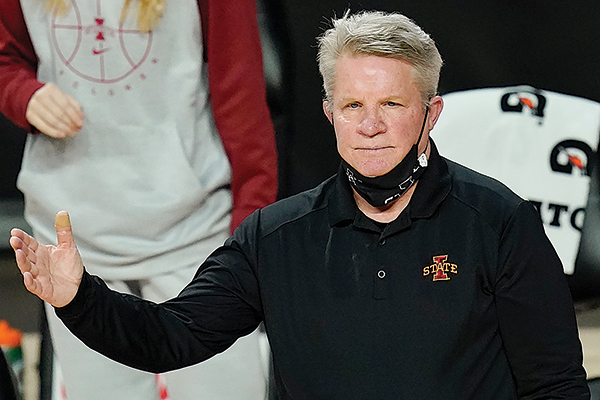
What began as a routine postgame press conference quickly turned into one of the most talked-about moments of the season. Calm at first, measured in tone but unmistakably firm in conviction, Fennelly delivered a series of remarks that reverberated far beyond Hilton Coliseum. His target was not a rival team or a controversial call. Instead, he took aim at the rapidly evolving world of Name, Image, and Likeness (NIL) agreements—calling it a “Wild West” that is, in his words, “destroying the soul of college basketball.”
Within hours, clips of the press conference spread across social media. Analysts debated his words on national television. Fans, players, donors, and administrators weighed in from every angle. What followed was not just a reaction—it was a full-blown national reckoning.
A Coach Who Has Seen Every Era
Bill Fennelly is not a newcomer raising alarms for attention. He is one of the most respected and longest-tenured coaches in women’s college basketball, having led Iowa State for decades. His career spans eras defined by different challenges—Title IX growth, scholarship battles, recruiting parity, and the steady rise of women’s basketball into the national spotlight.
That history is precisely why his comments struck such a nerve.
“This isn’t about being anti-player,” Fennelly said during the press conference. “It’s about asking what we’re turning this game into. When money becomes the first question instead of development, education, and team culture, we’re losing something fundamental.”
Those words landed hard in a sport already wrestling with its identity.
The NIL Debate Reaches a Breaking Point
NIL agreements were originally designed to give student-athletes long-overdue opportunities to profit from their own brand. For many women’s basketball players, NIL has been transformational—creating visibility, financial stability, and professional pathways that once barely existed.
But Fennelly’s critique touched on the darker undercurrents of the system.
Behind the scenes, NIL has become deeply intertwined with recruiting. While technically separate from pay-for-play, the line has grown increasingly blurry. Collectives backed by boosters now shape roster construction. High school stars are evaluating programs not just by coaching philosophy or player development, but by estimated earning potential.
According to Fennelly, this shift threatens the foundation of programs like Iowa State.
“We’ve built this program on trust, development, and relationships,” he said. “Now kids are being told to chase numbers instead of growth. That’s not progress—that’s chaos.”
Iowa State Caught in the Crossfire
The Cyclones women’s program has long been known for consistency, player loyalty, and a strong sense of identity. Iowa State is not typically associated with splashy NIL deals or headline-grabbing transfers. Instead, it has thrived by developing players over multiple seasons and fostering a culture of accountability.
Fennelly’s remarks raised uncomfortable questions: Can programs like Iowa State survive in an NIL-driven era? Is competitive balance slipping away from schools that refuse to play the money game aggressively?
Some critics accused Fennelly of resisting change. Others argued he was simply voicing concerns that many coaches are afraid to say publicly.
Current and former Iowa State players were quick to defend him, emphasizing that his stance comes from a place of protection rather than control.
“He cares about us as people, not assets,” one former Cyclone said privately. “That’s rare.”
A Divided National Response
Reaction across the college basketball world was immediate—and deeply divided.
Supporters praised Fennelly for his honesty, calling his comments courageous and overdue. Many fans expressed concern that unchecked NIL spending could create a two-tier system, where a handful of programs dominate while others are left behind regardless of coaching quality.
Critics, however, argued that NIL has finally empowered athletes—especially women—to claim value in a system that historically profited from their labor. To them, Fennelly’s words sounded like nostalgia for an era that no longer exists.
“This is the new reality,” one analyst said. “Adapt or fall behind.”
Yet even among those who support NIL, there is growing agreement that regulation and clarity are desperately needed.
What This Means for Women’s College Basketball
Unlike men’s basketball and football, women’s college hoops has only recently begun to see substantial financial investment. That makes the current moment both exciting and precarious.
On one hand, NIL has elevated star players, boosted attendance, and expanded media coverage. On the other, it risks undermining parity, long-term player development, and the educational mission that programs like Iowa State hold dear.
Fennelly’s comments forced the sport to confront a difficult truth: progress without structure can lead to instability.
“The question isn’t whether NIL should exist,” he said. “It’s whether we’re brave enough to fix what’s broken before it’s too late.”
A Turning Point or Just the Beginning?
Whether Bill Fennelly intended it or not, his words have become a rallying point. Coaches across the country are now being asked where they stand. Administrators are facing renewed pressure to define clearer boundaries. The NCAA, long criticized for its slow response to change, finds itself once again at the center of controversy.
For Iowa State, the moment is defining. The Cyclones are no longer just competing on the court—they are standing at the heart of a national debate about values, fairness, and the future of the game.
One thing is certain: women’s college basketball will never look at NIL the same way again.
And as the noise grows louder, Bill Fennelly’s warning continues to echo—a reminder that in the race toward the future, the soul of the sport may be the most important thing at stake.